Vaishnava Tilak (Urdhva-Pundra): Types and Meaning
5 min read · Updated 2026-07-16
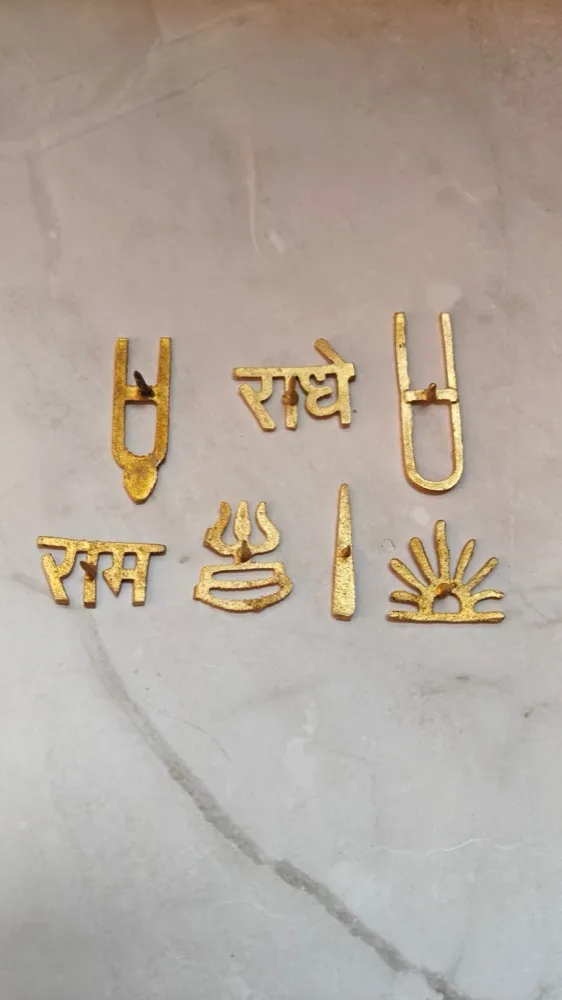
The upright mark on a Vaishnava's forehead is called tilak, and its shape — the urdhva-pundra — tells a whole story: to whom the wearer belongs, and that the body itself is a temple of the Lord.
What urdhva-pundra means
Urdhva-pundra means 'upright mark'. Unlike the three horizontal lines of Shaiva tilak (tripundra), Vaishnava tilak rises upward — typically two lines from the bridge of the nose up the forehead, the space between them understood as the sanctum where the Lord resides.
From the Shop
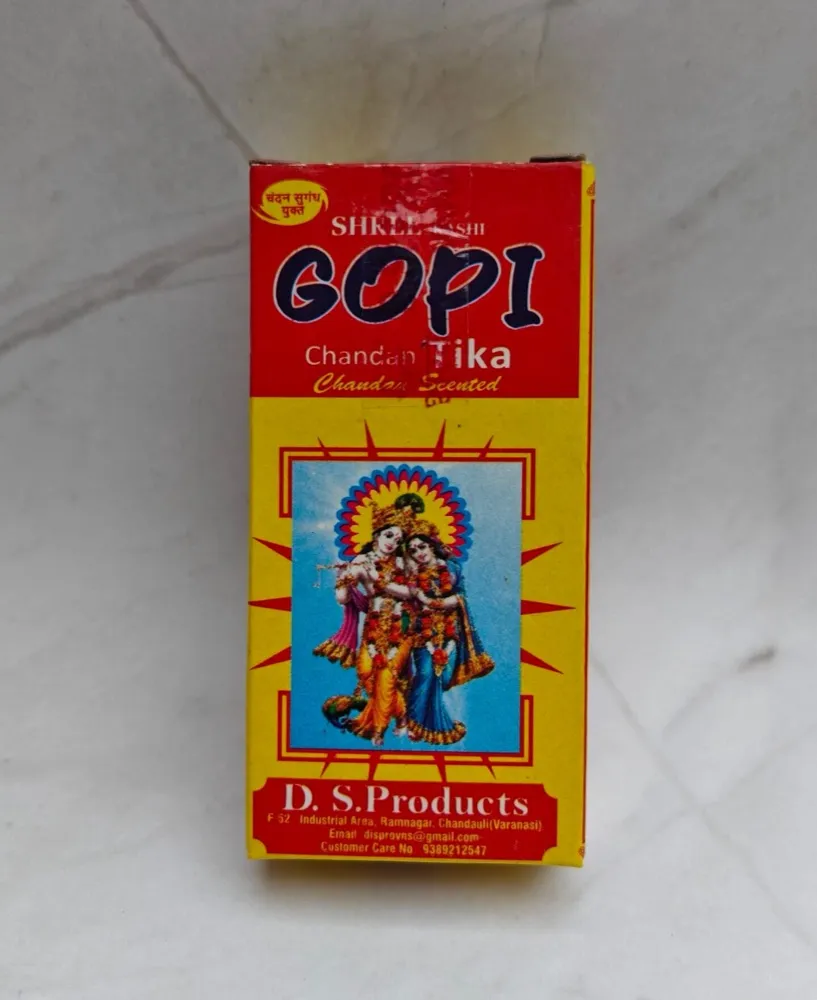
Gopi Chandan
₹20
The materials used
- Gopi chandan: the pale sacred clay of Dwarka and Vraja — the classic Vaishnava tilak material.
- Chandan (sandal): cooling sandal paste, fragrant and traditional.
- Additions: some traditions add a Tulsi leaf between the lines, or a small red mark (from kumkum or roli) at the base.

From the Shop
Chandan Dust Tika Powder
₹90
Different traditions, one upright form
Each Vaishnava lineage — the various sampradayas — has its own precise tilak, differing in the shape of the lines, the central mark and the material. Yet all share the upright urdhva-pundra, so that a Vaishnava is recognised at a glance and distinguished from the Shaiva horizontal mark.
Frequently Asked
- What is Vaishnava tilak?
- It is the urdhva-pundra — an upright mark, usually two lines, worn on the forehead to show devotion to Vishnu or Krishna. It marks the body as a temple of the Lord.
- What is tilak made of?
- Vaishnava tilak is usually made of gopi chandan (sacred clay) or chandan (sandal paste). Some traditions add a Tulsi leaf between the lines or a small red mark at the base.
- How is Vaishnava tilak different from Shaiva tilak?
- Vaishnava tilak is upright (urdhva-pundra), typically two vertical lines, while Shaiva tilak is three horizontal lines of ash (tripundra). The upright form distinguishes the Vaishnava traditions.