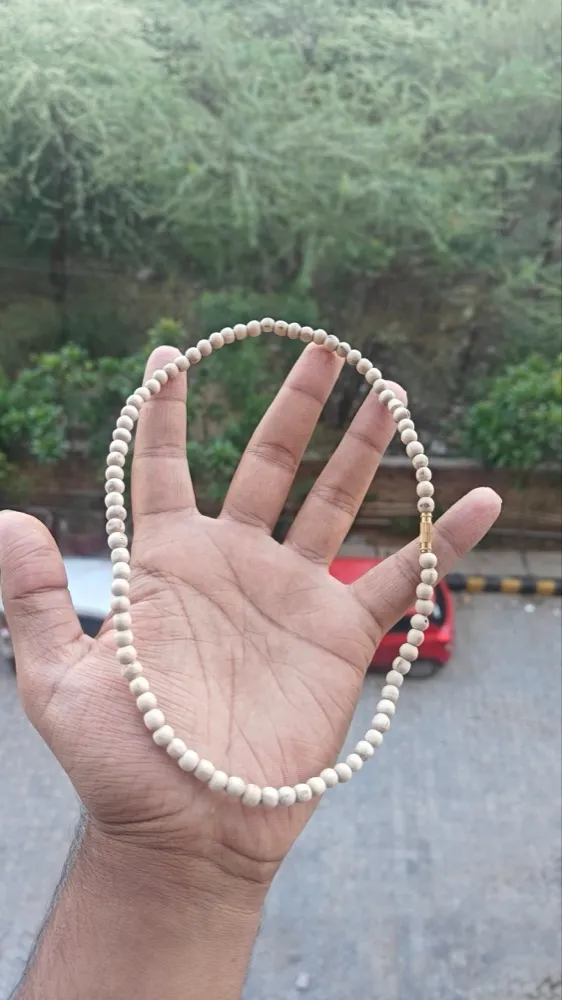
Tulsi & Kanthi
Tulsi Kanthi Mala: Meaning, Benefits & Why Vaishnavas Wear It
6 min read · Updated 2026-07-12
Among Vaishnavas — devotees of Vishnu and Krishna — few items are as beloved or as personal as the Tulsi kanthi mala. Unlike a decorative necklace, the kanthi is a spiritual identity worn at the throat: a quiet declaration that one has taken shelter in the Lord.
What is a Tulsi kanthi mala?
Kanthi means 'of the neck'. The mala is strung from small beads turned from the wood of the Tulsi plant (holy basil), the most sacred plant in the Vaishnava tradition. Tulsi Devi is worshipped as a pure devotee of Krishna, and her wood is considered non-different from her devotion. To wear it is to keep that devotion always at the throat, near the source of speech and the chanting of the Holy Name.
From the Shop
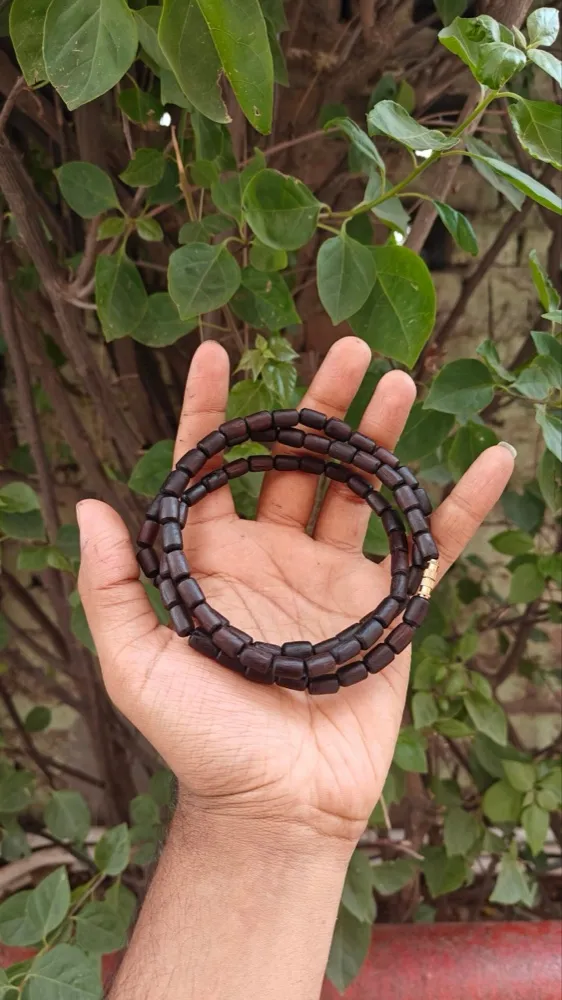
Black Long Beads 2 round Premium Tulsi Kanthi Mala
₹650
Benefits of wearing Tulsi kanthi
- Shelter and identity: it marks the wearer as a Vaishnava, one who has taken refuge in Krishna.
- Protection: tradition holds that Tulsi wards off inauspiciousness and negative influence.
- Purity of consciousness: worn at the throat, it is a constant reminder to speak and chant purely.
- Remembrance: like a thread tied to the heart, it keeps the Lord in mind through the day.
How it is worn
- It is traditionally received during initiation (diksha) from a guru, but sincere devotees commonly wear one as an expression of faith.
- Once worn, it is kept on continuously — not taken off and on like jewellery.
- It is treated with respect: kept clean, and honoured as sacred rather than ornamental.
- One, two or three rounds may be worn; the choice is personal and traditional, not a mark of status.
From the Shop
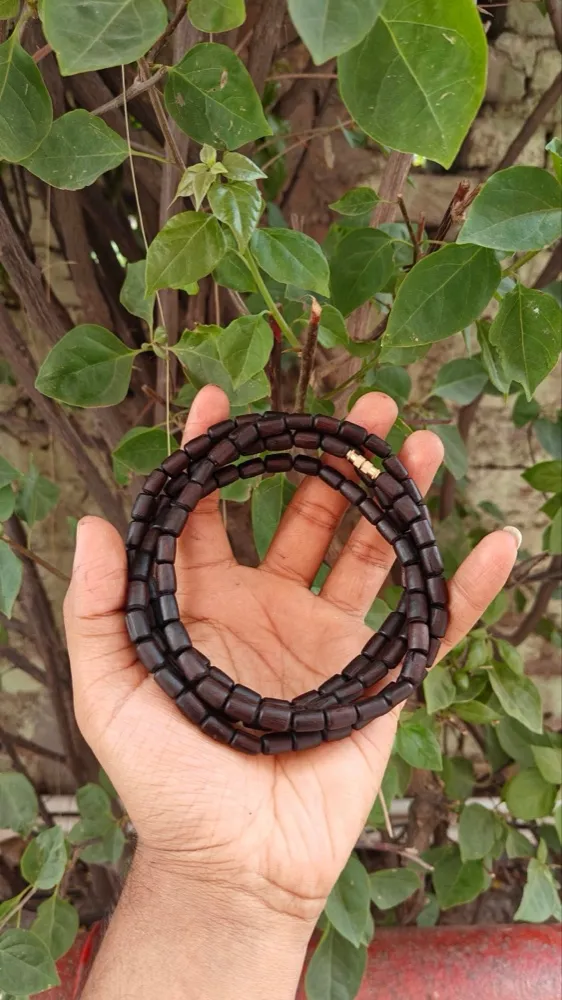
3 Round Black Long Beads Tulsi Kanthi Mala
₹900
Frequently Asked
- What is a Tulsi kanthi mala worn for?
- It is worn by Vaishnavas as a mark of shelter in Krishna, for protection, and as a constant reminder of devotion. It is a spiritual identity, not an ornament.
- Can anyone wear a Tulsi kanthi mala?
- Traditionally it is received at initiation, but any sincere devotee may wear one as an expression of faith. It should be treated with respect and worn continuously.
- What is the difference between 1, 2 and 3 round kanthi?
- The number of rounds is a matter of tradition and personal preference, not spiritual rank. All are worn the same way, at the throat.
- Should a Tulsi mala be removed while sleeping or bathing?
- Kanthi malas are generally kept on continuously. Many keep them on always; care is taken to keep them clean and treat them as sacred.