Tulsi & Kanthi
Vaijanti Mala: Meaning, Significance & How It Is Worn
5 min read · Updated 2026-07-16
In the descriptions of Krishna's beauty, one garland is named again and again — the vaijayanti mala. Made from the seeds of the vaijayanti plant, it is counted among the Lord's own adornments, and devotees wear or keep it as something especially dear to Him.
What is a Vaijanti mala?
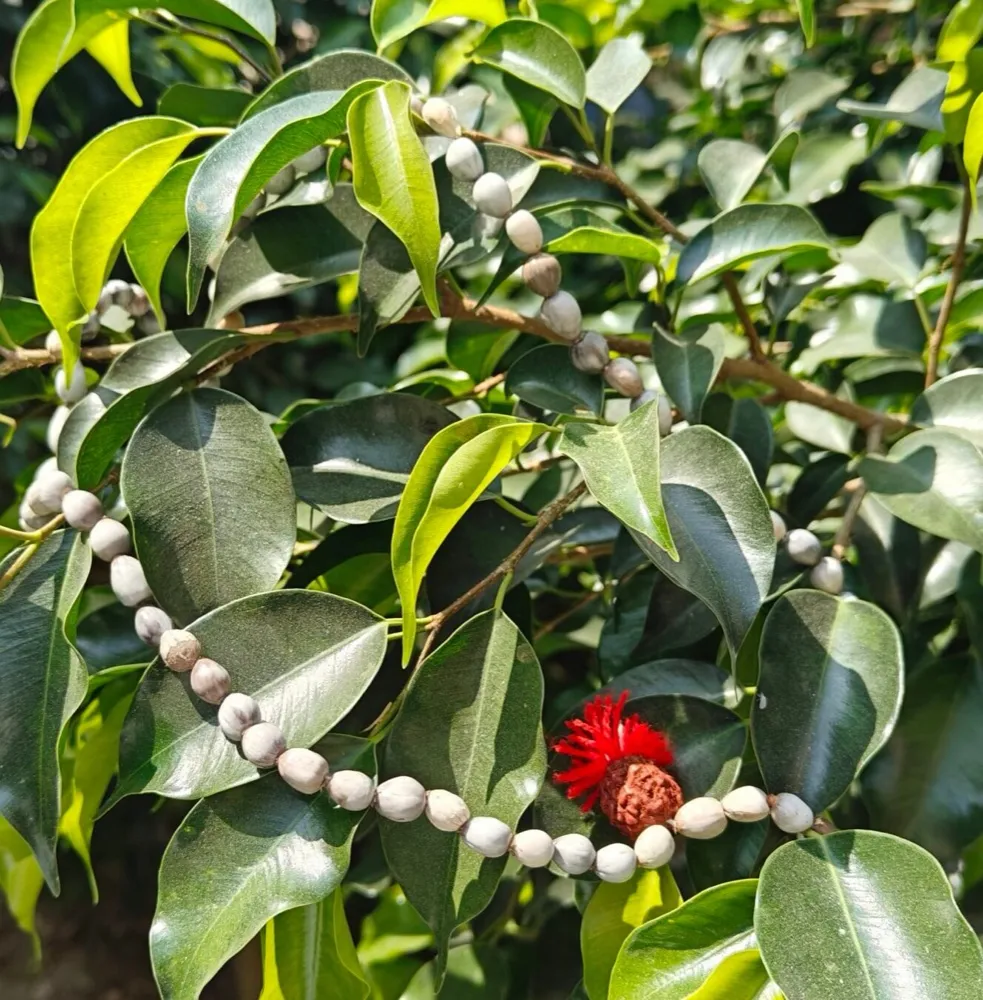
The mala is strung from small natural seeds of the vaijayanti (sometimes called the 'garland of victory'). Unlike carved beads, these are whole seeds — so each is subtly different in size and marking. That natural irregularity is the hallmark of a real Vaijanti mala.
From the Shop
Vaijanti Mala
₹150
Why it is loved by devotees
- Association with Krishna: the scriptures describe the Lord wearing a vaijayanti garland, so the mala evokes His remembrance.
- Auspiciousness: it is traditionally regarded as a garland of victory and good fortune.
- Natural beauty: the seeds' own shape and tone need no dye or polish to be lovely.
How it is worn and kept
- Worn around the neck as a devotional garland, or kept in the home shrine and offered to the deity.
- Handled gently — natural seeds are sturdier than they look but should be kept dry.
- Treated as sacred, like any mala; kept clean and off the floor.
Frequently Asked
- What is a Vaijanti mala made of?
- It is strung from the natural seeds of the vaijayanti plant. Because they are whole seeds, each bead is slightly different in shape and colour — a sign that the mala is genuine.
- Why is the Vaijanti mala associated with Krishna?
- The scriptures repeatedly describe Krishna adorned with a vaijayanti garland. Wearing or keeping the mala is a way of remembering the Lord in that beautiful form.
- Can I wear a Vaijanti mala with my Tulsi kanthi?
- Yes. Many devotees wear a Tulsi kanthi as their constant identity and keep a Vaijanti mala for its link to Krishna. The two complement each other.