Tulsi & Kanthi
Real vs Fake Tulsi Mala: How to Identify Genuine Tulsi Beads
6 min read · Updated 2026-07-16
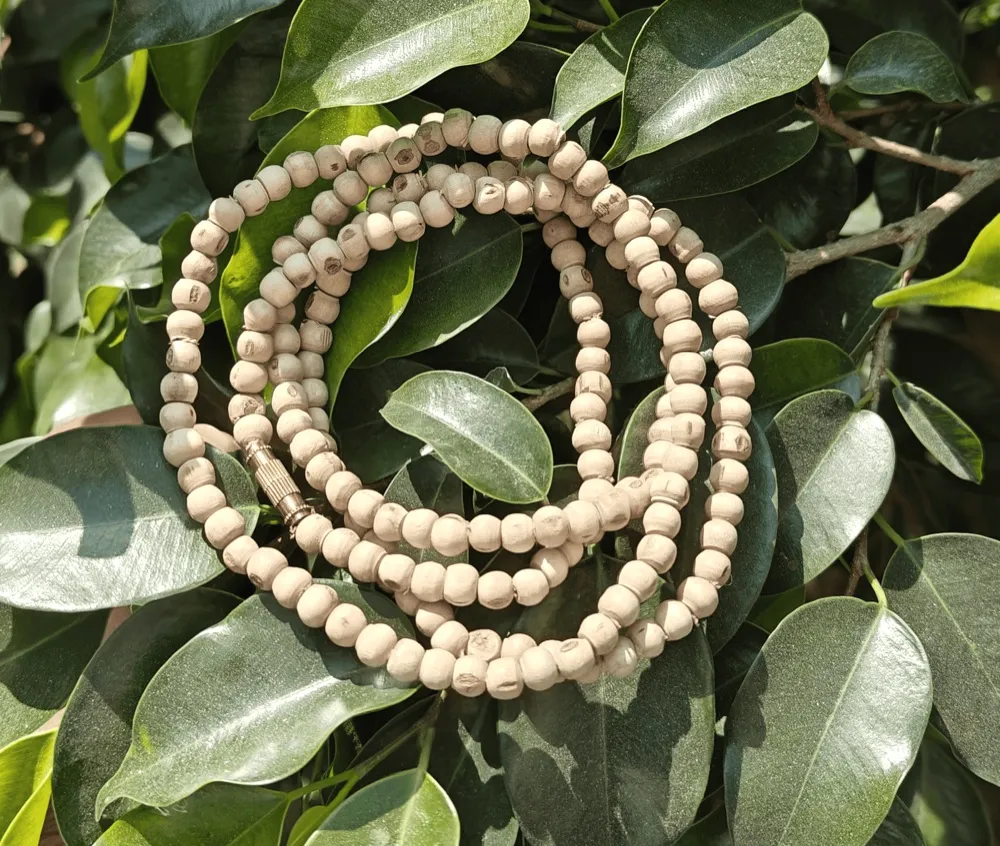
A Tulsi mala is sacred because of what it is made from — the wood of Tulsi Devi, the most revered plant in the Vaishnava tradition. That is exactly why imitations exist: dyed cheap wood, pressed sawdust, even plastic, sold as 'Tulsi'. Here is how to tell the genuine article from the counterfeit before you wear it at your throat.
What genuine Tulsi wood looks like
- Grain: real Tulsi shows a fine, irregular wood grain — tiny lines and pores. Plastic is perfectly smooth; pressed powder looks chalky and uniform.
- Colour: natural Tulsi ranges from pale cream to reddish-brown to dark (often darkened with ghee or oil in the finishing). Slight variation bead to bead is normal and good.
- Weight: Tulsi is a light wood. A mala that feels heavy or cold like glass or stone is not Tulsi.
- Warmth: wood warms quickly in the hand; plastic stays cool, glass and stone stay cold.
From the Shop
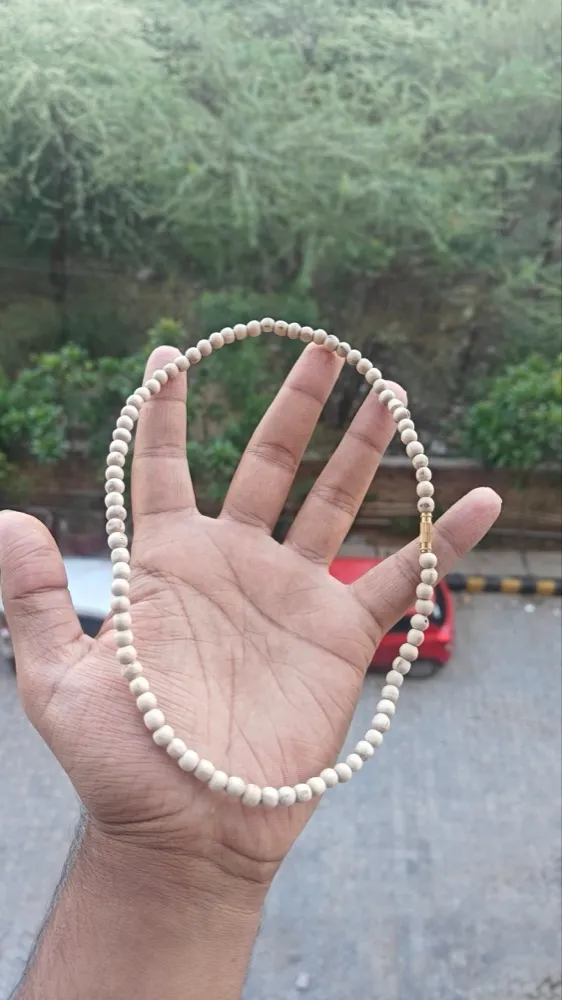
Gol Daana Tulsi Kanthi Mala ( 1 round)
₹210
The scent and rub test
Gently rub a bead between finger and thumb for a few seconds and smell it. Genuine Tulsi gives off a faint, dry, herbal-woody fragrance. Dyed wood often smells of varnish or dye; plastic smells of nothing or of chemical. This is one of the quickest honest checks.
From the Shop
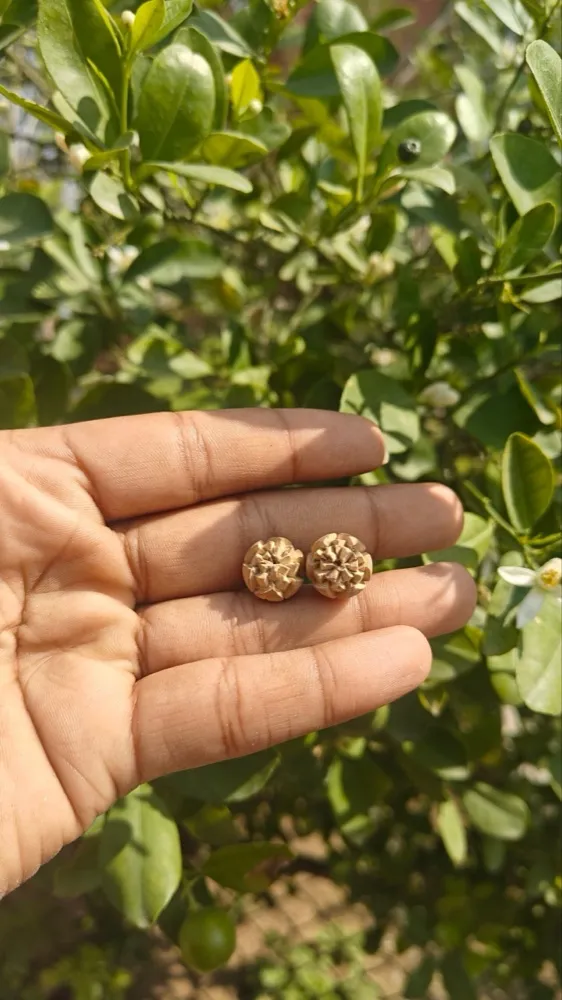
Handcrafted Original Tulsi Studs – Pure & Sacred from Vraja
₹230
Where fakes usually appear
- Very glossy, perfectly identical beads with a plastic sheen — likely moulded, not carved.
- Bright, unnatural uniform black or red — heavy dye rather than natural or ghee finishing.
- Unusually heavy or cold beads — glass, resin or stone sold as Tulsi.
- Sellers who will not say what the wood is, or who dress a mala up with grand claims instead of an honest photo.
Frequently Asked
- How can I tell if my Tulsi mala is real?
- Check the grain (fine natural wood lines, not a plastic sheen), the scent (a faint herbal-woody smell when rubbed), the weight (light, not heavy or cold) and warmth (wood warms in the hand). Genuine Tulsi shows slight natural variation bead to bead.
- Does a real Tulsi bead float in water?
- Often, but not always — the finishing and bead size affect it. Don't rely on the water test alone; grain, scent, weight and warmth together are far more reliable.
- Why is real Tulsi wood so light?
- Tulsi (holy basil) is a light, soft wood. That lightness is one of the easiest ways to distinguish it from glass, stone, resin or plastic imitations, which feel heavier and colder.
- Are dark black Tulsi beads fake?
- Not necessarily — many genuine Tulsi malas are darkened naturally or finished with ghee and oil over time. Worry only when the colour is a flat, unnatural uniform black with a plastic gloss and no wood grain.