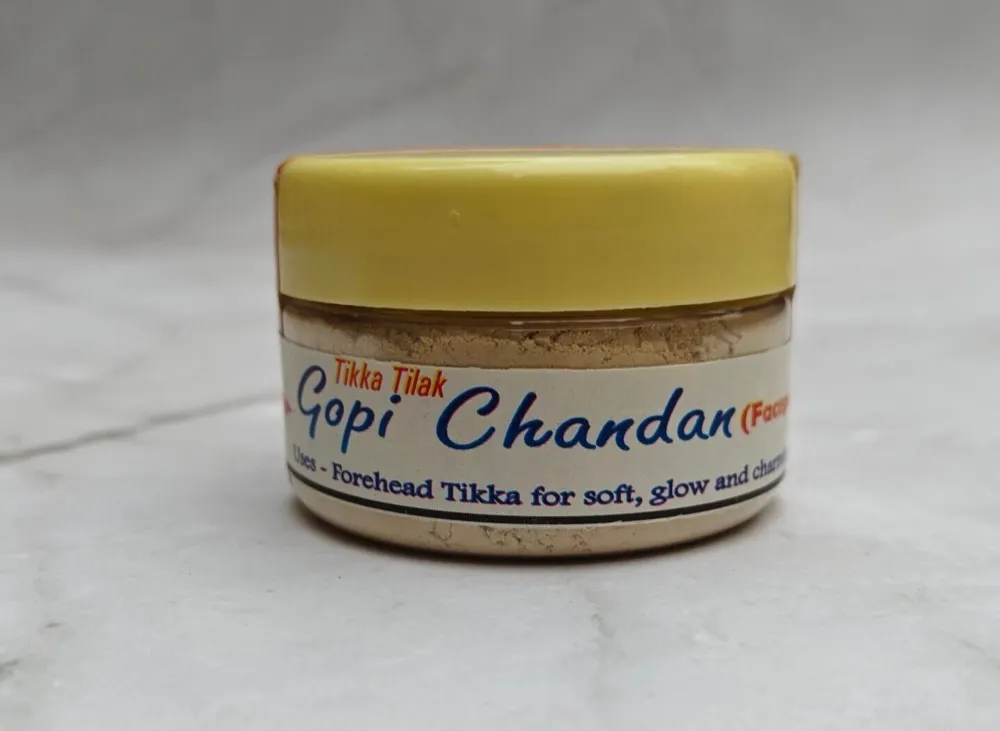
Gopi Chandan Tilak: Meaning and How to Apply It
5 min read · Updated 2026-07-16
The pale, upright mark on a Vaishnava's forehead is not decoration — it is a declaration. Made from gopi chandan, sacred clay, it marks the body as belonging to the Lord and as a temple in which He dwells. Here is what it is and how to apply it.
What is gopi chandan?
Gopi chandan is a soft, light-coloured clay traditionally gathered from the sacred ponds of Dwarka and the Vraja region — earth sanctified by association with Krishna and the gopis. Vaishnavas use it to mark tilak, in contrast to the sandal or ash used in other traditions.
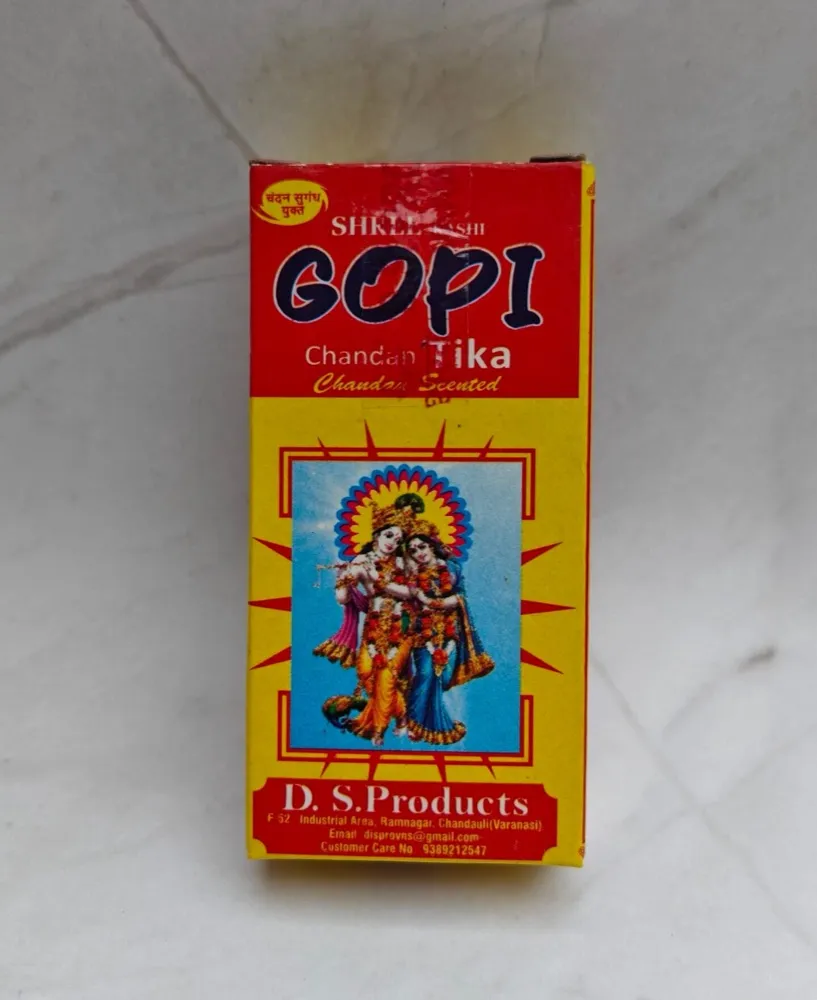
From the Shop
Gopi Chandan
₹20
The meaning of the urdhva-pundra
Vaishnava tilak is the urdhva-pundra — two upright lines rising from the bridge of the nose up the forehead, sometimes with a leaf or mark of Tulsi between them. The shape is understood as a temple, and the space between the lines as the abode of the Lord. To wear it is to offer the body itself as His dwelling.
How to apply gopi chandan tilak
- Take a little gopi chandan and mix it with a few drops of clean water to make a smooth paste.
- With a clean finger (traditionally the ring finger), draw two upright lines on the forehead, starting from the bridge of the nose and rising upward.
- Keep the two lines close and parallel, meeting or nearly meeting at the base near the nose.
- In fuller practice, apply the mark to twelve places on the body, uttering a Name of the Lord for each.
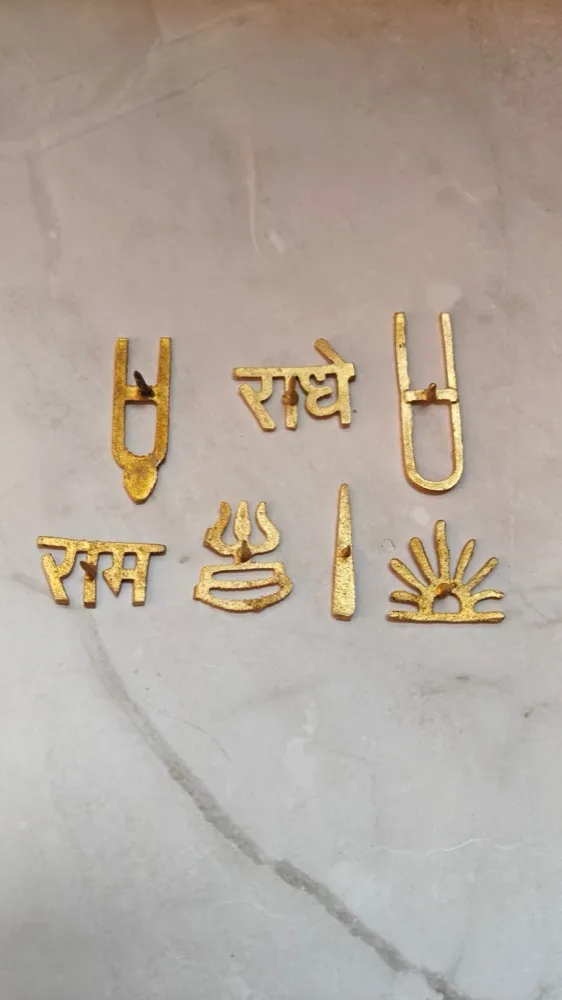
From the Shop
Set of 7 Tilak Stamps
₹149
Frequently Asked
- What is gopi chandan used for?
- It is the sacred clay Vaishnavas use to apply tilak — the upright urdhva-pundra mark on the forehead and body — marking the body as a temple of the Lord.
- How do you apply Vaishnava tilak?
- Mix gopi chandan with a little water into a paste, then draw two upright parallel lines with the finger from the bridge of the nose up the forehead. In full practice it is applied to twelve places on the body.
- What is the difference between Vaishnava and Shaiva tilak?
- Vaishnava tilak is the urdhva-pundra — two upright lines, usually of gopi chandan — while Shaiva tilak is typically three horizontal lines of ash (tripundra). The shapes mark different traditions.